
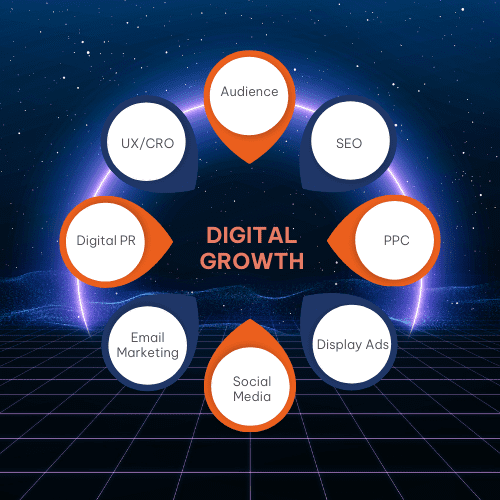
In 2025, digital marketing is no longer an optional strategy for businesses—it is a core requirement for growth and survival. Today’s customers rely heavily on the internet to discover brands, compare services, read reviews, and make purchasing decisions. Before contacting a business, most users search on Google, explore social media pages, and visit websites. If your business does not appear online at the right time, you lose potential customers to competitors.
Digital marketing helps businesses reach their audience exactly where they spend most of their time. Platforms like search engines, social media, email, and websites allow brands to stay visible throughout the customer journey. From creating awareness to generating leads and closing sales, digital marketing supports every stage of growth. Unlike traditional marketing, digital channels allow businesses to interact with users in real time and build long-term relationships.
One of the biggest advantages of digital marketing is measurability. Businesses can track website traffic, user behavior, engagement, and conversions with complete transparency. This data-driven approach helps brands understand what strategies are working and where improvements are needed. Campaigns can be optimized instantly, reducing wasted budget and improving performance.
Digital marketing is also highly cost-effective and scalable. Small businesses can compete with larger brands by targeting specific audiences, locations, and interests. Whether it is SEO, social media marketing, paid ads, or content marketing, businesses can start small and scale as they grow. In 2025, digital marketing is not just about visibility—it is about building trust, credibility, and sustainable growth.