
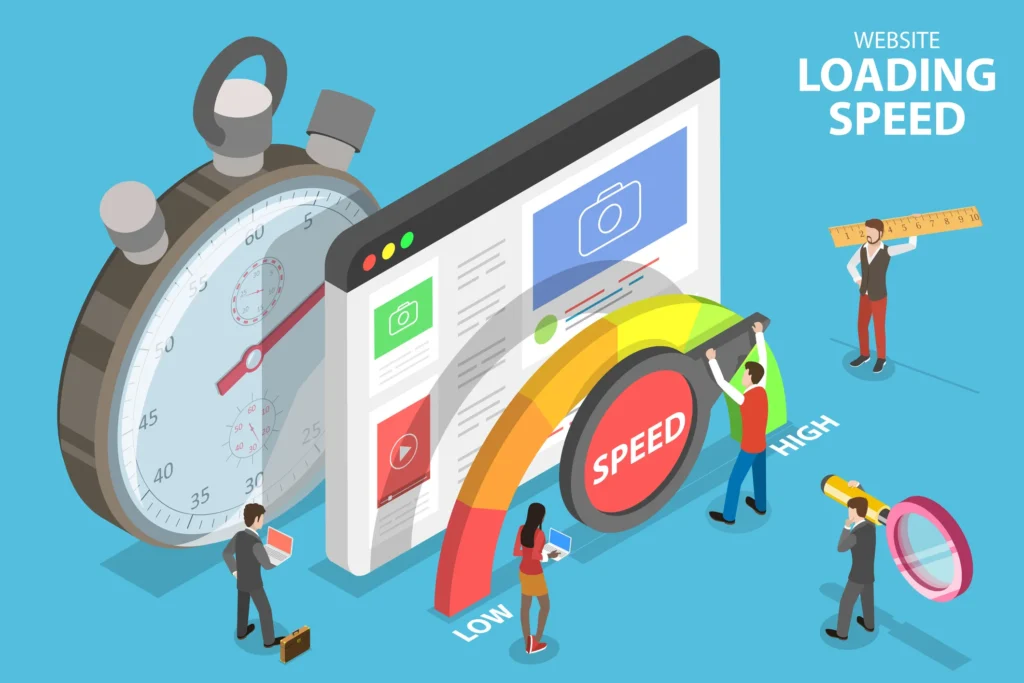
Website speed directly affects user experience, search engine rankings, and overall business performance. In today’s fast-paced digital environment, users expect websites to load quickly. Even a delay of a few seconds can frustrate visitors and cause them to leave before interacting with the content. Slow-loading websites often experience higher bounce rates, lower engagement, and fewer conversions.
Search engines, especially Google, place strong importance on website speed because it directly impacts user satisfaction. Google prioritizes fast-loading websites in search results, as they provide a smoother and more efficient browsing experience. Factors such as page load time, interactivity, and visual stability are part of Google’s ranking considerations. A slow website not only loses visitors but also struggles to compete in search engine rankings.
Several technical factors influence website speed. Large and unoptimized images are one of the most common causes of slow performance. Compressing images without compromising quality can significantly reduce loading time. Hosting quality also plays a major role. Reliable and fast hosting ensures that website data is delivered quickly to users, especially during high traffic periods. Additionally, unnecessary scripts, heavy plugins, and excessive code can slow down a website and should be minimized or optimized.
A fast website improves more than just SEO—it builds trust and credibility. Users associate fast-loading websites with professionalism and reliability. When pages load smoothly, visitors are more likely to stay longer, explore more pages, and take desired actions such as filling out forms or making purchases.
Improving website speed leads to better engagement, higher conversion rates, and improved customer satisfaction. By focusing on performance optimization, businesses create a better experience for users and gain a competitive advantage in both search rankings and customer retention.