
A website is often the first interaction a potential customer has with a business, and first impressions matter greatly in the digital world. Even if a website attracts a high volume of traffic through SEO or ads, poor website design can prevent visitors from converting into leads or customers. Design is not just about how a website looks—it is about how it works and how users experience it.
One of the most common and damaging design mistakes is slow loading speed. Today’s users expect websites to load within a few seconds. If a page takes too long to open, visitors become frustrated and leave before even exploring the content. Slow websites also negatively impact search engine rankings, increasing bounce rates and reducing overall performance. Factors such as unoptimized images, heavy scripts, and poor hosting often contribute to slow loading times.
Another major issue is poor mobile responsiveness. With the majority of users browsing on smartphones and tablets, a website must adapt smoothly to all screen sizes. If text is difficult to read, buttons are hard to click, or layouts break on mobile devices, users quickly lose trust in the brand. A non-responsive website not only affects user experience but also leads to lost conversions and lower search engine visibility.
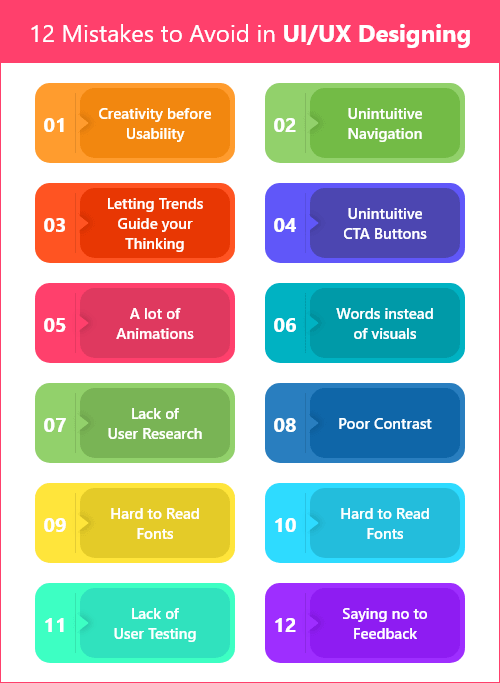
Confusing navigation and cluttered layouts are also serious conversion blockers. Users should be able to find information easily and intuitively. When menus are unclear, pages are overloaded with content, or important information is buried, visitors feel overwhelmed and leave. Clear structure, logical page flow, and simple design help users move smoothly through the website.
Another critical mistake is having unclear or weak call-to-action (CTA) buttons. A website should guide users on what to do next—whether it is contacting the business, booking a service, or requesting a quote. If CTAs are hidden, poorly written, or not visually noticeable, users are less likely to take action. Strong CTAs provide direction and improve conversion rates significantly.
Lastly, many websites fail to build trust due to missing trust elements. Testimonials, client reviews, certifications, contact details, and social proof help reassure users that the business is reliable and professional. Without these elements, visitors may hesitate to engage or share their information.
A well-designed website focuses on simplicity, usability, and clarity. It prioritizes user needs, loads quickly, works seamlessly on all devices, and guides visitors naturally toward action. By identifying and fixing common design mistakes, businesses can dramatically improve user engagement, increase conversions, and achieve better overall business performance.