
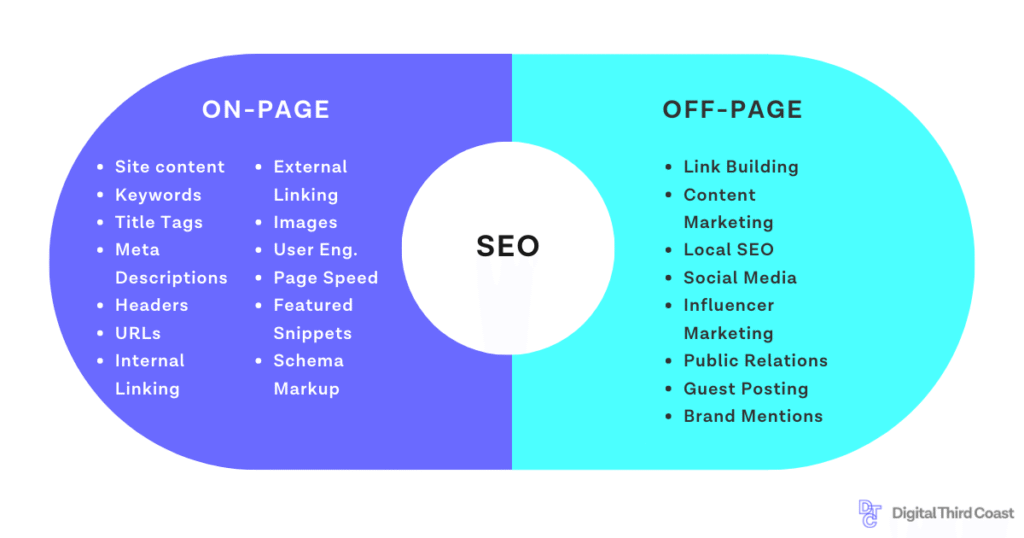
SEO is broadly divided into two main categories: on-page SEO and off-page SEO. Both play a vital role in how search engines evaluate and rank a website. Neither can deliver strong results on its own. To achieve consistent and long-term rankings, businesses must focus on improving both areas together.
On-page SEO refers to all the optimization efforts made directly on the website. This includes improving content quality, using clear and structured headings, optimizing meta titles and descriptions, creating strong internal linking, enhancing page speed, and ensuring mobile responsiveness. On-page SEO also involves optimizing images, improving URL structure, and making sure the website offers a smooth user experience. These elements help search engines understand the topic, relevance, and value of each page.
High-quality content is the core of on-page SEO. Content that matches user intent, answers questions clearly, and provides real value is more likely to rank higher. Proper keyword placement helps search engines connect your content with relevant searches, while a well-organized site structure makes it easier for search engines to crawl and index pages efficiently. Without strong on-page SEO, even a website with many backlinks may struggle to rank because search engines cannot properly interpret its content.
Off-page SEO, on the other hand, focuses on building authority and trust outside the website. It includes strategies such as acquiring backlinks from reputable and relevant websites, earning brand mentions, collecting positive online reviews, and building a strong online presence across platforms. Backlinks are especially important because they act as signals of credibility. When trusted websites link to your content, search engines view your website as reliable and valuable.
Off-page SEO also helps improve brand awareness. When a business is mentioned across blogs, forums, social platforms, and directories, it strengthens its digital reputation. This external validation supports better rankings and increases user trust. However, quality matters more than quantity. A few high-quality backlinks from authoritative sources are far more effective than many low-quality links.
On-page and off-page SEO work best when they support each other. On-page SEO builds a strong foundation by ensuring the website is relevant, informative, and user-friendly. Off-page SEO strengthens that foundation by adding authority and trust signals. A balanced SEO strategy that combines both helps websites achieve stable rankings, improved visibility, and long-term growth. Businesses that consistently invest in both aspects are more likely to outperform competitors and maintain strong search engine presence over time.